Why Is My Lawn Turning Yellow in Spots? (A Step-by-Step Diagnosis Guide)
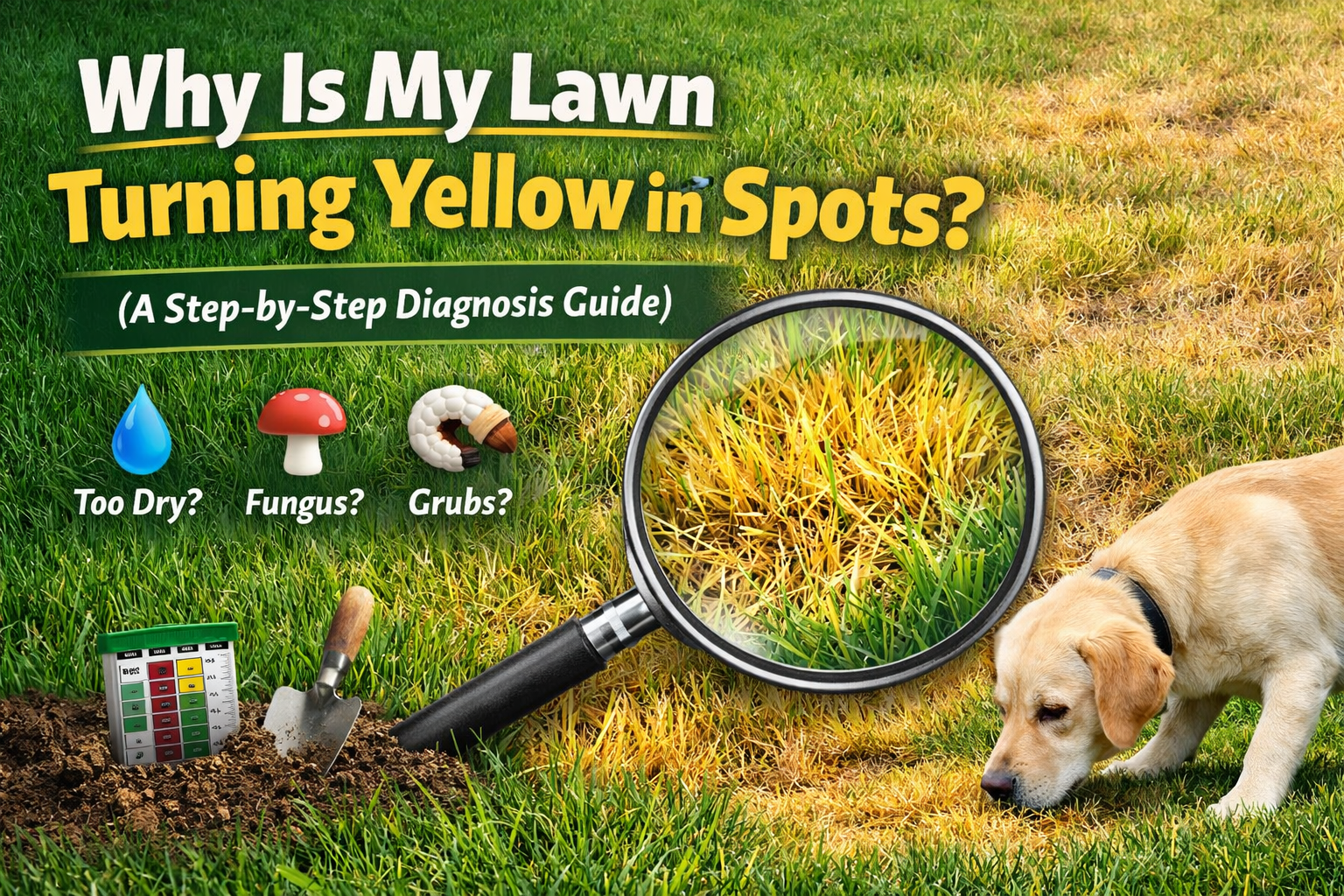
Is your lawn turning yellow in spots? This comprehensive guide covers common causes, diagnosis tips, and effective solutions to restore your lawn's health. Learn how to prevent future issues and keep your lawn vibrant and green!
Why Is My Lawn Turning Yellow in Spots? Complete Diagnosis Guide 2026 { "@context": "https://schema.org", "@type": "Article", "headline": "Why Is My Lawn Turning Yellow in Spots? (A Step-by-Step Diagnosis Guide)", "description": "Comprehensive guide covering common causes, diagnosis tips, and effective solutions to restore your lawn's health.", "author": { "@type": "Organization", "name": "Analyze My Lawn" }, "publisher": { "@type": "Organization", "name": "Analyze My Lawn", "logo": { "@type": "ImageObject", "url": "https://analyzemylawn.com/logo.png" } }, "datePublished": "2026-01-26", "dateModified": "2026-01-26", "mainEntityOfPage": { "@type": "WebPage", "@id": "https://analyzemylawn.com/blog/lawn-turning-yellow-in-spots" } } Understanding Lawn Discoloration: Why Is My Lawn Turning Yellow in Spots?
Have you ever stepped outside and noticed that your once-green lawn is now turning yellow in spots? This issue, known as lawn turning yellow in spots due to various factors, is a common problem homeowners face. Lawn discoloration is common. Understanding the causes saves you time, money, and stress. Early diagnosis helps you tackle problems before they worsen.
Common Causes of Yellow Spots
Many factors can cause your lawn to turn yellow, and each needs a different remedy. Let's take a look at some of the most common causes.
Nutrient Deficiencies
Nutrient deficiencies often cause yellowing in lawns. Nitrogen, potassium, and iron are essential for grass health.
- Nitrogen. A deficiency can cause yellowing, especially in older grass blades.
- Iron. When lacking, younger leaves exhibit a yellowish tint while the veins remain green.
- Potassium. A shortage can lead to rapid yellowing, combined with a weak root system.
Pests and Insects
Many pests and insects can cause localized yellowing in your lawn, contributing to the lawn turning yellow in spots. Common culprits include:
- Grubs. These larvae feed on grass roots, causing patchy yellow spots.
- Chinch Bugs. They suck the sap from stems, leading to discoloration.
Check for irregular yellowing patterns and signs of pests.
Diseases and Fungal Infections
Lawn diseases, often caused by fungi, can result in yellow spots, which may be a part of the the lawn turning yellow in spots issue. Common types include:
- Brown Patch. A fungal disease that creates circular yellow patches.
- Dollar Spot. It produces small patches of yellow grass with a silver-white border.
Regular inspection for symptoms can help you catch these diseases early.
Environmental Factors
Environmental factors significantly affect lawn health. Consider these factors:
- Drought. Lack of water can stress grass, leading to yellowing.
- Overwatering. Excess water can drown the roots, leading to yellow patches.
- Soil Compaction. Compacted soil hinders root growth and nutrient uptake.
Get Instant AI-Powered Diagnosis
Upload a photo of your lawn and receive personalized treatment recommendations in seconds
Effective Diagnosis of Lawn Issues: Identifying Why Your Lawn Is Turning Yellow in Spots
Identifying the cause of yellow spots is the first step to restoring your lawn's health. Here are steps to diagnose the issue effectively.
Observing Lawn Conditions
Observe your lawn's overall conditions. Look for factors such as:
- Patterns of yellowing (random or uniform)
- Areas with different sunlight exposure
- Density of the grass in affected areas
These observations can help narrow down potential causes.
Checking Soil Quality
Next, check your soil quality. Test pH and nutrient levels with a home kit or send samples to a local extension service. Ideal pH for most grasses is between 6.0 and 7.0. Here's what to look for:
- Low nitrogen levels. May require fertilization.
- High acidity. Can be addressed with lime.
Evaluating Moisture Levels
Watering habits are crucial for lawn health. Check your watering patterns:
- Too little watering. Will lead to drought stress.
- Too much watering. Can cause soggy conditions and root rot.
Adjust your watering schedule to improve moisture management.
Comprehensive Solutions for Resolving Lawn Turning Yellow in Spots
After diagnosing the issue, implement solutions for each cause of yellow spots.
Solutions for Nutrient Deficiencies
To fix nutrient deficiencies, consider these solutions:
- Fertilizers. Apply a balanced fertilizer to replenish nutrients. Liquid fertilizers can provide immediate results.
- Specific Nutrients. For nitrogen deficiency, consider a fertilizer high in nitrogen. For iron, choose products containing iron sulfate.
Pest Control Strategies
Use these strategies to control pests effectively:
- Insecticides. Use targeted insecticides for grubs and chinch bugs as a last resort. Organic options like neem oil can be effective.
- Beneficial Insects. Encourage natural predators, like ladybugs, to help control pest populations.
Treatment for Lawn Diseases
To treat lawn diseases, follow these steps:
- Fungicides. Apply fungicides at the first sign of disease. Follow the label instructions for effectiveness.
- Proper Maintenance. Aerate your lawn and ensure adequate sunlight reaching all areas to prevent future outbreaks.
Adjusting Environmental Factors
Here are tips for managing environmental factors:
- Watering Techniques. Water deeply but infrequently to encourage deeper root growth.
- Soil Aeration. Aerate your lawn to alleviate compaction and improve drainage.
Preventative Lawn Care Tips to Prevent Your Lawn from Turning Yellow in Spots
Once you've addressed the yellow spots caused by the problem of lawn turning yellow in spots, adopting preventative measures can maintain lawn health.
Regular Maintenance Schedule
Create a seasonal lawn care checklist that includes:
- Fertilization. Every 6-8 weeks during the growing season.
- Mowing. At the right height for your grass type to promote healthy growth.
Importance of Soil Testing
Include soil testing in your annual lawn care routine. Testing improves nutrient balance and prevents deficiencies before they occur.
Choosing the Right Grass Type
In areas with temperature extremes, choose grass types that withstand local conditions. Opt for drought-resistant types in arid climates.
When to Call a Professional
You can resolve many lawn care issues on your own, but some need a professional's expertise. Look for these signs:
- Your efforts. Haven't yielded results after multiple attempts.
- Significant pest infestation. You're facing a significant pest infestation or disease outbreak.
Professional lawn care services can provide comprehensive solutions and ensure your lawn remains healthy and vibrant.
Conclusion: Taking Action Against Lawn Turning Yellow in Spots for a Healthier Yard
If your lawn is turning yellow, quickly diagnosing the problem is essential. By understanding the common causes and taking decisive action, you can restore your lawn's health. Remember, proactive lawn care and regular maintenance are the keys to a lush, green yard.
Ready to Transform Your Lawn?
Get personalized AI-powered recommendations based on your lawn's specific condition
Tags: lawn turning yellow in spots, lawn care tips, yellow grass causes