Best Lawn Care Routine for Busy Homeowners With No Experience

A comprehensive guide for busy homeowners with no experience on maintaining a beautiful lawn. Discover tips on creating an efficient lawn care routine, essential tools, understanding grass types, soil health basics, and troubleshooting common lawn issues for a thriving outdoor space.
Why Lawn Care Matters for Busy Homeowners
For busy homeowners with no experience, knowing the best lawn care for beginners routine for busy homeowners with no experience can seem daunting. A well-maintained lawn enhances your home's beauty and your enjoyment, potentially increasing your property value by up to 15%.
Understanding the Importance of Lawn Care
Lawn care is vital for keeping your outdoor space beautiful. It transforms a simple yard into a welcoming area suitable for relaxation, family gatherings, and outdoor activities.
Addressing Lawn Care Challenges for Busy Homeowners
Busy families often lack time for lawn maintenance. Between work obligations, social events, and daily chores, lawn care often falls by the wayside.
The Benefits of a Beautiful Lawn
A well-kept lawn offers several benefits, including:
- Creates a welcoming environment for family and friends. A lush, green yard is inviting and enhances your home's curb appeal.
- Increases property value. A beautiful lawn can significantly boost your property's market value, making it an essential investment.
- Promotes relaxation and outdoor activities. A healthy lawn provides a perfect space for children to play and pets to roam.
Establishing an Easy Lawn Care Routine for Beginners
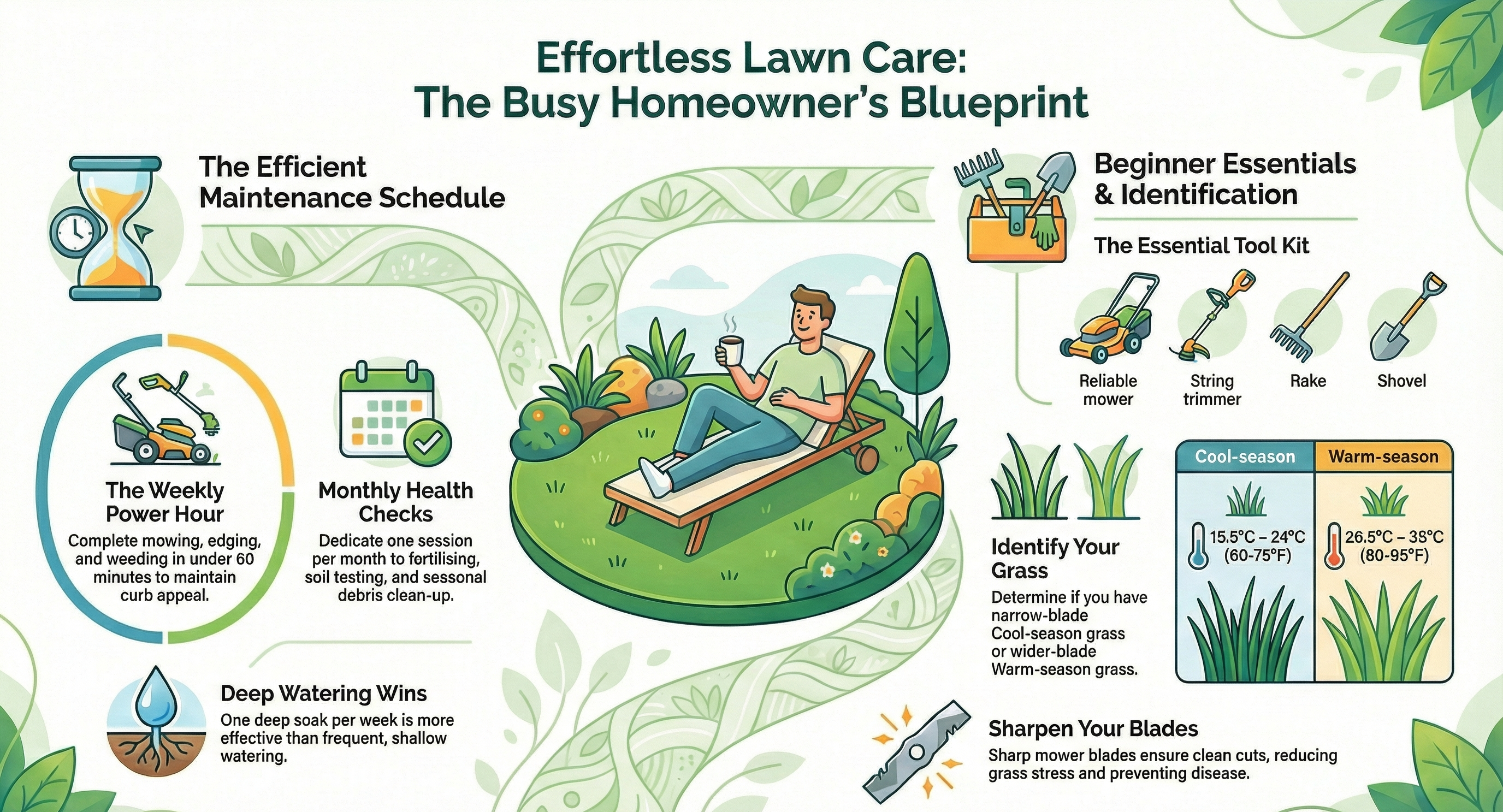
Quick Answer: The best lawn care routine for busy homeowners with no experience involves mowing weekly, watering deeply with 1-1.5 inches of water per week, and fertilizing every 6-8 weeks. By dedicating just 1 hour each week, you can maintain a healthy lawn without overwhelming your schedule.
For busy homeowners with no experience, establishing the best lawn care routine is crucial for maintaining a beautiful yard without overwhelming your schedule. With a few simple adjustments, you can maintain a gorgeous lawn without dedicating your entire weekend to yard work.
Essential Weekly and Monthly Lawn Care Tasks
A productive lawn care routine for busy homeowners with no experience includes specific tasks that can be divided into weekly and monthly categories, such as mowing weekly for about 1 hour and fertilizing every 6-8 weeks. Here are the essential tasks:
- Weekly: Mowing, edging, and basic weeding should be performed weekly, which can usually be completed in under an hour. Following a proper mowing schedule can make this task even easier.
- Monthly: Tasks like fertilizing your lawn, testing soil health, and seasonal clean-up should occur monthly.
How to Create an Effective Lawn Care Schedule
Make a lawn care schedule to stay on track. You can use a simple calendar or digital tools like apps to set reminders for each task. Consistency is key to maintaining a healthy lawn.
Simple Techniques for Maintaining a Healthy Lawn
Consider implementing these straightforward techniques as part of the best lawn care routine for busy homeowners with no experience to simplify your lawn maintenance:
- Watering: Deep watering once a week is more effective than frequent shallow watering.
- Mowing: Keep mower blades sharp for a clean cut, which minimizes stress on the grass. Consider using a Lawn Mower Blade Sharpener to maintain optimal blade performance. Consider using a Lawn Mower Blade Sharpener to maintain optimal blade performance. Lawn Mower Blade Sharpener to maintain optimal blade performance.
- Fertilizing: Using slow-release fertilizers helps ensure your lawn receives nutrients consistently.
Essential Tools for Effortless Lawn Care
The right tools make lawn care easier for busy beginners. Here’s what you’ll need to get started on your lawn care journey.
Essential Lawn Care Tools for Beginners
Here are essential tools for effective lawn care:
- Lawn mower: A reliable mower is necessary for maintaining grass height.
- String trimmer: Useful for edging and managing areas a mower can't reach.
- Rake: Necessary for collecting leaves and debris.
- Shovel and spade: Helpful for soil work, planting new grass, or creating garden beds.
Affordable Lawn Care Tool Options
For those on a tight budget, consider visiting local second-hand shops or borrowing tools from neighbors to reduce costs. Many stores also offer cost-effective, high-quality tools suitable for beginners.
When to Invest in Quality Equipment
As you gain experience, invest in quality equipment to save time and effort. Quality tools tend to be more durable and efficient, ultimately saving you money in the long run.
Identifying Grass Types for Tailored Lawn Care
Grass types vary widely. Understanding your lawn's specific grass type is essential for successfully implementing the best lawn care routine for busy homeowners with no experience.
Identifying Common Grass Types for Better Care
In the United States, grass typically falls into two categories: cool-season and warm-season grasses. It's vital to know which one is predominant in your area:
- Cool-season grasses: Thrive in northern regions and prefer temperatures between 60-75°F.
- Warm-season grasses: Ideal for southern climates, growing best when temperatures are between 80-95°F.
Tips for Identifying Your Grass Type
You can identify your grass type visually by looking at:
- Color: Cool-season grasses are often a deeper green, while warm-season types are lighter in color.
- Blade width: Warm-season grass has wider blades compared to the narrower blades of cool-season grass.
Tailoring Care to Grass Type
Once you identify your grass type, you can tailor your care accordingly:
- Watering: Each type requires specific watering strategies—cool-season grasses benefit from more frequent, lighter watering.
- Mowing frequency: Warm-season grass should be mowed higher than cool-season grass.
Improving Soil Health for a Thriving Lawn
Healthy soil is the foundation of a strong lawn. Here are some straightforward tips to enhance your soil quality.
Understanding Soil's Role in Lawn Health
Soil supports the roots of your grass, supplying essential nutrients and moisture. Healthy soil contributes significantly to the overall health of your lawn.
Easy Soil Amendments for Lawn Improvement
Improving soil health can be achieved through easy amendments:
- Compost: Adding compost enriches the soil and supports beneficial organisms.
- Mulch: Mulching around the grass can help retain moisture and reduce weed growth.
Testing and Understanding Your Soil
Know your soil's pH and nutrient content. Perform simple soil tests at home or buy kits from gardening stores for accurate results.
Common Lawn Issues: Quick Fixes for Busy Homeowners
You may encounter common lawn issues despite your best efforts. Identify and address these challenges quickly for a healthier lawn.
Recognizing Common Lawn Issues
Look for signs of unhealthy grass, including:
- Discoloration: Yellowing can indicate nutrient deficiencies or water stress.
- Patchy areas: Usually caused by poor soil conditions or pests.
Effective Solutions for Weeds and Pests
When weeds-in-your-yard">dealing with weeds and pests, consider:
- Hand-pulling: Effective for small infestations.
- Organic options: Such as vinegar or boiling water for weeds; insecticidal soap for pests.
When to Seek Professional Help
If problems continue, reach out to professionals. Complex problems involving disease or extensive pest infestations might require expert attention.
Seasonal Lawn Care Checklist: Year-Round Tips for Busy Homeowners
Your lawn requires different care throughout the year. Follow this seasonal checklist to keep your lawn in top shape.
Key Spring Lawn Care Tasks
Spring is ideal for rejuvenation. Key tasks include:
- Fertilization: Apply a slow-release fertilizer to prepare your grass for growth.
- Seeding: Overseed bare patches to encourage thick growth.
- Weeding: Remove any spring weeds early to prevent them from spreading.
Essential Summer Lawn Maintenance Tips
Summer brings heat that can stress your lawn. Focus on:
- Watering: Ensure your lawn receives adequate moisture; this is the most crucial task.
- Mowing: Keep the mower blade higher during hotter months to protect the grass roots.
Fall and Winter Preparation
Preparation for colder months is essential for winter survival:
- Fall fertilization: Apply nutrients to support root growth and recovery.
- Mulching: Consider mulching leaves to protect the grass beneath.
- Winterization: Mow the grass for the last time and adjust the height based on grass type.
Conclusion: Cultivating Sustainable Lawn Care Habits for Long-Term Success
Fostering good lawn care habits as part of the best lawn care routine for busy homeowners with no experience is a gradual process, but it is highly rewarding.
As you adopt a thoughtful routine, you’ll see the difference.Creating a Mindful Lawn Care Routine
Be mindful while doing your lawn care tasks. Take the time to learn; this investment pays off substantially in the long run. Consider setting aside a specific time each week to focus solely on your lawn care. This not only helps you stay organized but also allows you to appreciate the progress you’re making. You can even turn this into a family activity, where everyone can contribute and learn together.
Be mindful while doing your lawn care tasks. Take the time to learn; this investment pays off substantially in the long run.
The Benefits of a Healthy Lawn Over Time
Regular maintenance as part of the best lawn care routine for busy homeowners with no experience creates a vibrant, sustainable landscape. Enjoying the fruits of your labor can become a pleasurable and relaxing activity.
Resources for Continuous Learning
Feel free to expand your knowledge on the best lawn care routine for busy homeowners with no experience. There are numerous resources available, including books, gardening clubs, and online courses geared towards beginners.
Frequently Asked Questions
What is the best time to water my lawn?
The best time to water your lawn is early morning, ideally between 6 AM and 10 AM, to minimize evaporation and allow grass to absorb moisture effectively.
How often should I mow my lawn?
You should mow your lawn at least once a week during the growing season to maintain optimal grass health and appearance.
What type of fertilizer is best for beginners?
For beginners, a slow-release nitrogen fertilizer applied every 6-8 weeks is ideal, as it provides consistent nutrients without overwhelming the grass.
How much water does my lawn need weekly?
Your lawn typically needs about 1-1.5 inches of water per week, either from rainfall or irrigation, to stay healthy and green.
How can I tell if my lawn is healthy?
A healthy lawn should be vibrant green, have a uniform texture, and show minimal signs of weeds, pests, or discoloration.
Q: Common Lawn Care Questions
Many new homeowners have questions about lawn care. Here’s a quick breakdown of frequent concerns:
- How often should I mow my lawn? Mow at least once a week during the growing season.
- When is the best time to water? Early morning is ideal, as it minimizes evaporation.
Q: Tips for Beginners
Starting your best lawn care routine for busy homeowners with no experience can be confusing, but simple steps lead to great results. Start small, focusing on one task at a time. For example, you might begin with just mowing and watering before adding fertilizing and weeding to your routine. This gradual approach allows you to build confidence and competence without feeling overwhelmed. Additionally, consider keeping a journal to track your progress and note what works best for your lawn.
Starting lawn care can be confusing, but simple steps lead to great results. Start small, focusing on one task at a time.
Dealing with Climate-Specific Issues
Your local climate greatly affects your lawn. Adjust watering and care practices according to the weather trends in your area for the best results.
Troubleshooting Tips: Quick Solutions for Common Lawn Challenges
Effective Weed Control Strategies
Regularly inspect your lawn to control weeds. Here are some effective ways to tackle persistent weeds:
- Pre-emergent solutions: Apply before weed seeds germinate.
- Physical removal: Hand-pull problematic weeds to manage small outbreaks.
Identifying and Solving Watering Issues
Watch for signs of overwatering or underwatering:
- Overwatering: Grassy areas that are consistently soggy.
- Underwatering: Grass that's brown and dry, signaling moisture stress.
Dealing With Dull Mower Blades
Dull mower blades tear grass and create health issues. Regularly sharpen blades for optimal performance. A sharp blade cuts grass cleanly, promoting better healing and growth.
Tags: Best Lawn Care Routine for Busy Homeowners With No Experience, lawn care tips, maintaining a lawn, easy lawn care